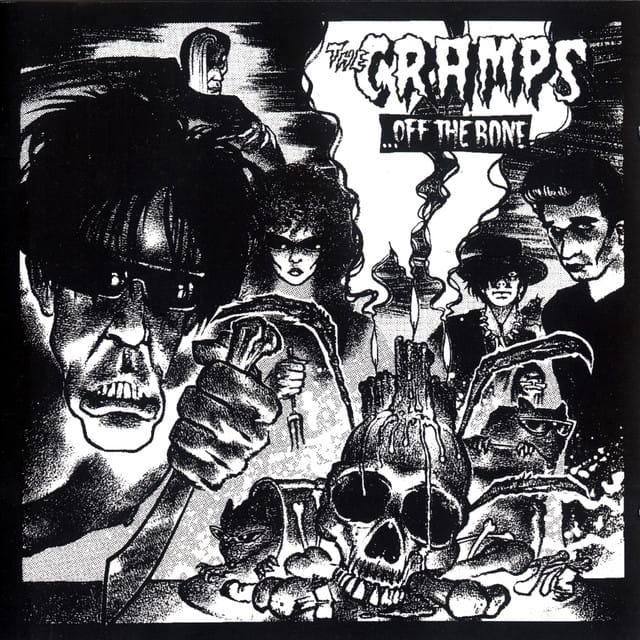

The Cramps were a psychobilly-tinged rock band formed in 1976 in Sacramento, California, later based in New York City; their core members were Lux Interior (Erick Purkhiser) and Poison Ivy (Kristy Wallace), whose onstage chemistry and retro-horror aesthetic made them instantly recognisable. Rather than attempting to fit into any tidy scene, they grafted 1950s rockabilly and early rock ’n’ roll onto a punk velocity and a fetish for B-movie gore and kitsch — a sound and look that felt like a private midnight movie played back at maximum volume. Lux’s snarling, theatrical vocals and Poison Ivy’s reverb-soaked, tremolo-heavy guitar created a sound both primitive and inventive: you could hear the ghost of Gene Vincent and Link Wray in their riffs, but the songs were twisted into a carnival-macabre form that few other bands dared to touch.
Their influences were unusually specific and proudly uncool: obscure rockabilly records, 1950s rock ’n’ roll, early rhythm and blues, trashy horror-film soundtracks, and the darker corners of blues and doo-wop. Lux and Ivy mined 45s from thrift shops and jukeboxes, so their palette included artists like Roky Erickson, Screamin’ Jay Hawkins, and Bobby “Boris” Pickett as much as the more obvious predecessors. They also absorbed the raw energy of the first-wave punk scene — the Stooges and the MC5 provided attitude and volume — but The Cramps filtered that aggression through noirish humour and retro melodrama, which is why labels like “psychobilly” or “punkabilly” stuck to them even though they always felt like their own category.
Other musicians have openly acknowledged The Cramps’ influence: their aesthetic and sound left fingerprints on later psychobilly acts such as Reverend Horton Heat and The Meteors, and they inspired garage-revival and indie bands that valued attitude and vintage tone over polish. Artists in the alternative scene — from Nick Cave to Iggy Pop — have cited admiration for Lux and Poison Ivy’s uncompromising persona and showmanship; the band’s blend of style and shock influenced the theatricality of alternative rock performance in the 1980s and 1990s. Even outside strict musical lines, fashion designers and subcultural movements (gothic rockers and rockabilly revivalists alike) borrowed freely from The Cramps’ cocktail of retro glamour and sleazy glamour.
Anecdotes about The Cramps underline their cult-myth status. An oft-told story: when they played their notorious 1978 shows in New York, the crowd included both punk scenesters and middle-American collectors of 1950s culture, an unusual mix that sometimes produced volatile, memorable nights — the band enjoyed fanning that friction. Lux Interior was famous for inserting toys, props and campy horror pieces into performances; one memorable live-image that circulated in punk lore was him luxuriating over the stage in a ragged fur coat, sometimes brandishing a rubber bat or fake blood, turning each set into a lurid vaudeville. Another true-to-life detail: Poison Ivy was not just a guitarist but the band’s sonic architect — she frequently produced records and hand-picked rare records, shaping the band’s catalogue and image with an exacting vintage sensibility.
Despite their outsider status, The Cramps left a durable legacy: they never scored huge commercial hits, but their records and live shows created a template for how to wear nostalgia like armour and how to make camp and menace coexist in a pop format. They maintained an independent streak throughout their decades together — continuous touring, a rotating lineup of sidemen around the unshakeable Lux and Poison Ivy, and a catalogue that rewarded digging for B-sides and rare singles. When Lux Interior died in 2009, many musicians and fans reflected that The Cramps had permanently widened the vocabulary of rock by proving you could make music that was both reverent toward the past and gleefully subversive.