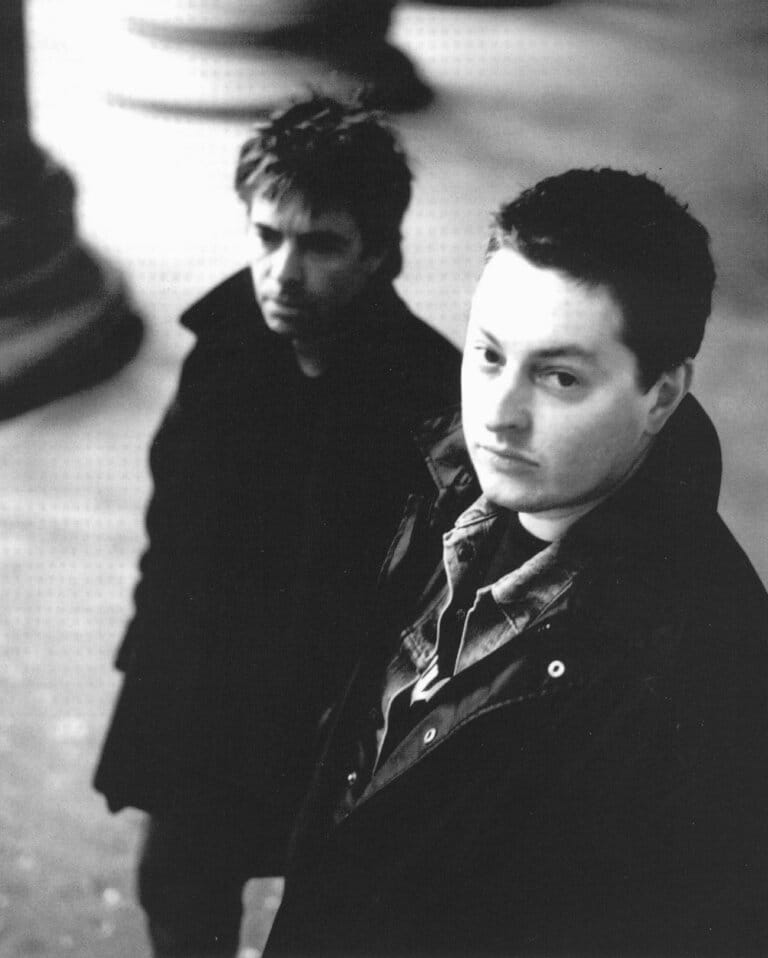

The Sugarcubes formed in Reykjavík in 1986, a band that immediately disrupted expectations for what popular music from Iceland could sound like. Fronted by the singular, dramatic presence of Björk Guðmundsdóttir and anchored by songwriter and guitarist Þór Eldon plus Einar Örn Benediktsson’s off-kilter trumpet and vocal counterpoint, they were a product of a small, intensely creative scene — but one that sounded impossibly vast. Their early singles, especially “Birthday” (1987), arrived like transmissions from a city where the weather and the theatre bled into everyday life: cold, bracing, theatrical, and strangely human. They cut against the glossy pop of the mid-’80s with jagged arrangements and a willingness to let chaos and humour coexist with melody.
The band’s lineage is unmistakably Nordic but eclectic. They grew out of Iceland’s post-punk and punk-pop ferment — members had roots in bands like Purrkur Pillnikk and KUKL — and their music carries traces of punk’s brashness, art-rock’s ambition, and cabaret’s theatricality. They were clearly conversant with the angular post-punk of the UK (think early Siouxsie or Gang of Four) while also nodding to the melodic sensibilities of Broadcast-era pop, but they refused easy categorisation. Björk’s voice moved between fragile confession and operatic intensity, and the band often used brass, dissonant sonic textures, and abrupt structural shifts in ways that made their songs feel like compact dramatic scenes rather than standard verse-chorus postcards.
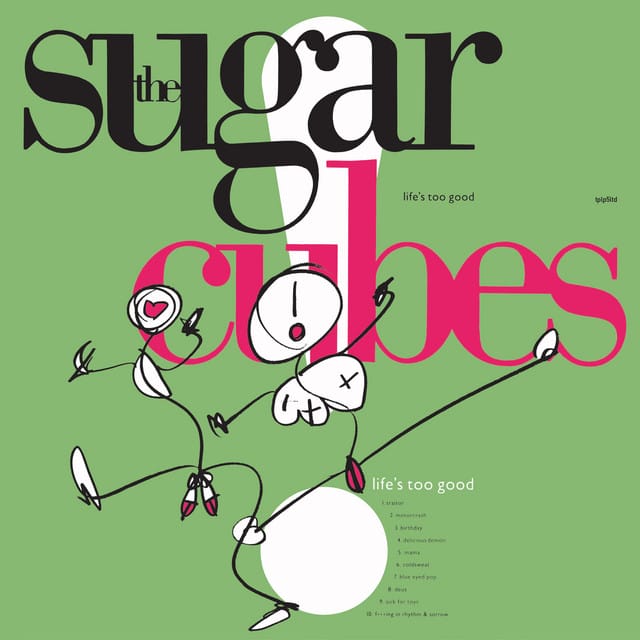
The Sugarcubes’ influence is both direct and diffuse. On one hand, they helped open the world’s ears to Iceland as a creative hotbed and paved the way for the global attention Björk would later command as a solo artist. On the other, their aesthetic — a mix of theatricality, wry humour, and an embrace of eccentricity — reverberates through later indie and alternative acts who prize personality and theatrical staging over conformity. While it’s hard to point to long lists of mainstream bands that cite them as a primary influence, many alternative musicians and critics have acknowledged how the group’s success proved that small-country oddness could translate internationally; their signing to One Little Indian and the reception of their debut LP, Life’s Too Good (1988), was widely discussed as a blueprint for how distinctive regional acts might break out.
Famous anecdotes about the band often focus on the striking contrast between Björk’s later global superstardom and the group’s communal, sometimes chaotic origins. One oft-repeated story: when The Sugarcubes played in London in the late ’80s, journalists and audiences were baffled and thrilled in equal measure — some left bewildered by Einar Örn’s wild stage banter, others transfixed by Björk’s magnetism. There’s also the image of Reykjavík’s tight-knit music community, where members’ previous projects overlapped and personalities were larger than venues; that sense of proximity fed both their sound and the myth that the band was more collective art project than conventional pop outfit. Their decision to split in 1992 felt less like a dramatic rift and more like a mutual recognition that different artistic paths — notably Björk’s solo trajectory — needed to be followed.
Politically and culturally, The Sugarcubes resonated with left-leaning critics because they embodied a rejection of commodified homogeny and foregrounded community and eccentricity at a time when mainstream pop was becoming increasingly market-driven. Their humour, their fondness for subverting expectations, and their refusal to smooth edges for mass consumption made them emblematic of an alternative cultural politics — one that suggested music could be playful, strange, and serious all at once. That posture has enduring appeal: the band’s records still sound like a challenge to the listener to pay attention on the group’s terms, and that insistence feels, even now, refreshingly humane.