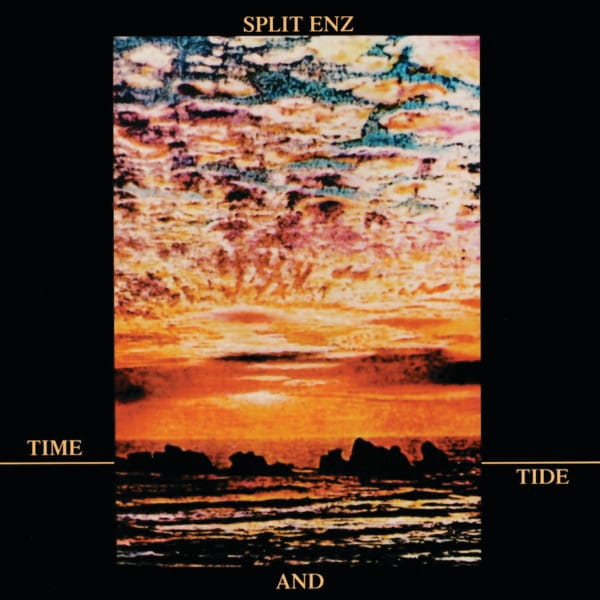
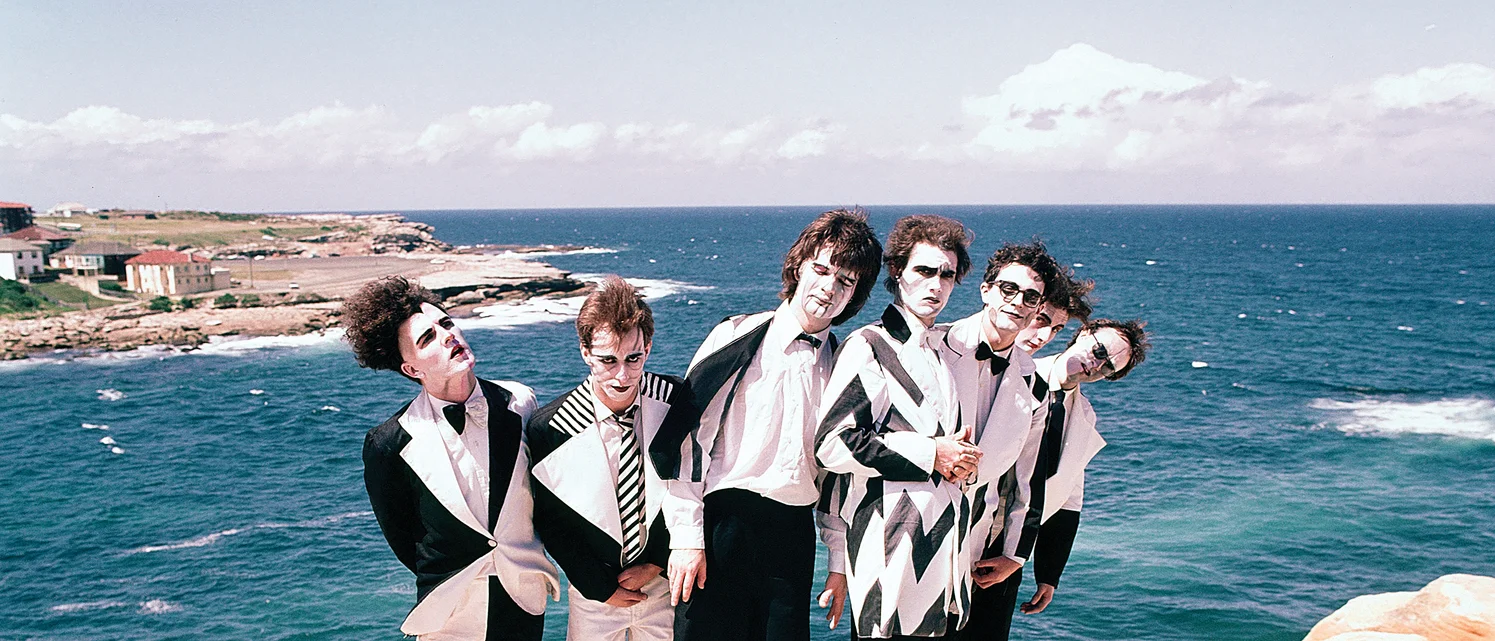
Split Enz are one of those rare bands whose visual eccentricity matched an uncommonly restless musical imagination. Formed in 1972 in Auckland, New Zealand, by brothers Tim and Phil Judd and later steadied by Neil Finn’s arrival in 1977, the group moved from folkish art-rock into jagged new wave and theatrical pop, always refusing easy categorisation. Their early years were fuelled by a kind of playful paranoia — dramatic makeup, braided hair and harlequin stage outfits — that made them as much a performance collective as a rock band. That look wasn’t merely vanity; it foregrounded a critique of mainstream culture at a time when New Zealand felt both geographically and culturally peripheral to London and New York.
Musically, Split Enz drew on an idiosyncratic mix: the baroque pop and theatricality of David Bowie and Roxy Music, the wit and angularity of British art-school post-punk, and a lingering influence from the soulful pop traditions of their antipodean peers. Tim Finn’s melodic gifts and Neil Finn’s arrival sharpened their songwriting into pop forms that still retained odd metres and uneasy chord changes — a reminder that accessibility and experimentation needn’t be mutually exclusive. They also absorbed local sensibilities; the band’s songwriting often reflects a southern hemisphere awareness of space, weather and small-town anxieties, which gives their hits a slightly skewed emotional edge compared with northern-hemisphere pop of the same era.
Split Enz’s influence has been quietly pervasive across Australasian music. Crowded House — Neil Finn’s next project — is the most obvious direct descendant, but you can trace Split Enz’s DNA through New Zealand acts who adopted theatricality and meticulous songwriting as political acts against the blandness of mainstream radio. Internationally, while they never achieved the same market saturation as some UK or US acts, musicians and industry figures frequently cite them as proof that ambitious pop can come from outside the major cultural capitals. Their willingness to foreground artifice and costume as a method of examining identity and spectacle anticipated later generations who use image politically rather than purely commercially.
There are a few famous anecdotes that capture the band’s blend of humour and self-seriousness. One oft-repeated story has Tim Finn turning the studio into a kind of laboratory during the recording of “True Colours” (1980) — a record that brought them their biggest international success — insisting on meticulous sonic textures and even bizarre recording techniques to get the right emotional timbre. Another is the sheer theatricality of their live shows in the late 1970s and early 1980s, when audiences in small New Zealand towns saw a troupe-like band that seemed to come from a parallel, more fantastical version of their own islands. Those moments made Split Enz not just a hit-making concern but a cultural happening for a generation who found in them an articulate form of Antipodean identity.
Politically and culturally, the band’s arc is interesting to read from a left-leaning perspective because their artifice operated as a critique of cultural centralism and commodified pop. They refused the homogenising tendencies of the mainstream while still engaging with pop craft — a balancing act that made them frustrating to record executives but rewarding for listeners who wanted substantive pop. Even today, revisiting Split Enz’s catalogue feels timely: the tension between spectacle and sincerity, provincial life and cosmopolitan aspiration, is a useful mirror for artists seeking to make music that is both thoughtful and widely communicative.