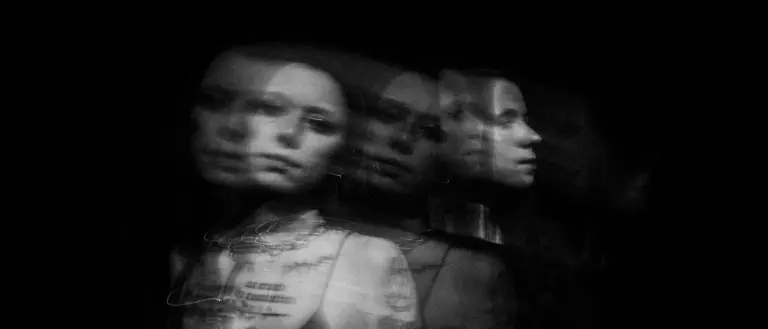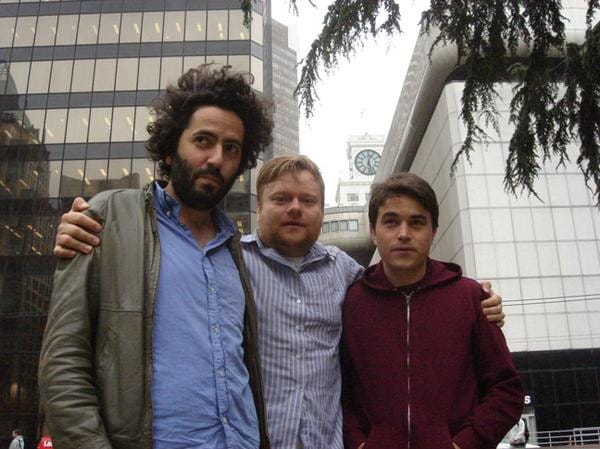

Sink Ya Teeth are a London-based quartet whose music navigates a gritty intersection of post-punk angularity and pop-minded melodicism. Formed in the late 2010s around a nucleus of long-standing collaborators from south-east London DIY scenes, they’ve consistently foregrounded tight rhythmic interplay: jerky, determined guitar lines lock with a metronomic bass and drums, while their vocal delivery oscillates between deadpan observation and charged urgency. Their songs often feel like dispatches from the underside of the city — claustrophobic yet lucid — which helps explain why they’ve become a quietly significant voice in contemporary British underground music rather than a flash-in-the-pan club curiosity.
Influence-wise, Sink Ya Teeth wear their lineage on their sleeves without sounding like an exercise in retro pastiche. There are clear debts to early Gang of Four and A Certain Ratio in their funk-inflected post-punk grooves, and the melodic phrasing occasionally nods to late-’70s Talking Heads; but they also absorb the sharper, sparser production aesthetics of more recent UK peers such as Black Midi and Squid. Lyrically they share a kinship with politically minded songwriters — think of the observational bite of Sleaford Mods or the urban domesticity of Pulp — though Sink Ya Teeth’s approach is less diaristic and more impressionistic: brief scenes and gestures that reveal broader social textures.
Over the last few years, members of several better-known bands have been candid about the inspiration they drew from Sink Ya Teeth’s early releases. Notably, a guitarist from an established post-punk act recounted in an interview how a Sink Ya Teeth EP changed the way they approached rhythmic displacement in their own writing; that kind of peer recognition, while not headline-grabbing, has helped the group cement a reputation as musicians’ musicians. Critics and fellow artists tend to cite the band’s ability to translate political frustration into taut, hook-driven songs without surrendering intelligence for immediacy — a balancing act that has made them a reference point for younger DIY acts in London and beyond.
A couple of anecdotes have circulated in scene reporting that capture both their humour and their politics. At a well-attended squat-show early in their career, the band’s singer famously paused mid-set to help a visibly distressed audience member find a lost bus pass, then finished the set without missing a beat — an incident that spread on local message boards as a small emblem of the community-mindedness of that scene. On another occasion, their van was impounded while they were on tour across the north, and instead of cancelling dates they booked in two last-minute house shows that sold out on word-of-mouth; the impromptu gigs were later described by attendees as the night the band ‘stole the tour back’, which feels suitably emblematic of their DIY tenacity.
Sink Ya Teeth’s cultural importance isn’t measured in chart placings but in the way they’ve modelled a particular political and aesthetic stance: music-making that is collectivist, anti-spectacle, and attuned to everyday irritations and solidarities. Their recorded work rewards close listening — grooves that reveal small adjustments on repeat plays, lyrics that flip from sardonic to tender — while their live shows have a reputation for being brisk, unglamorous affairs where the band prioritise connection over presentation. For listeners exhausted by both retro revivalism and slick, depoliticised indie, Sink Ya Teeth offer a bracing alternative: uncompromising, literate, and rooted firmly in the city that shaped them.