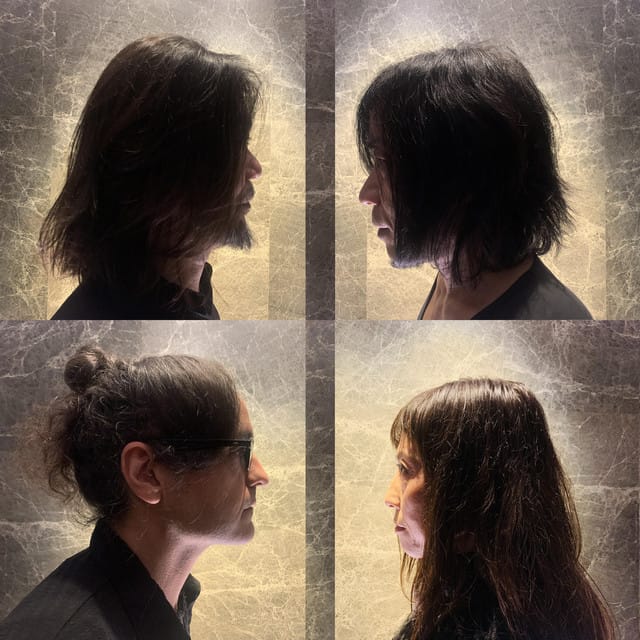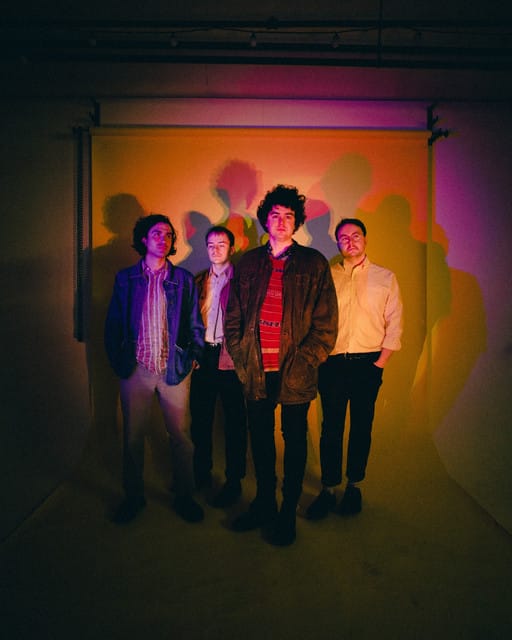
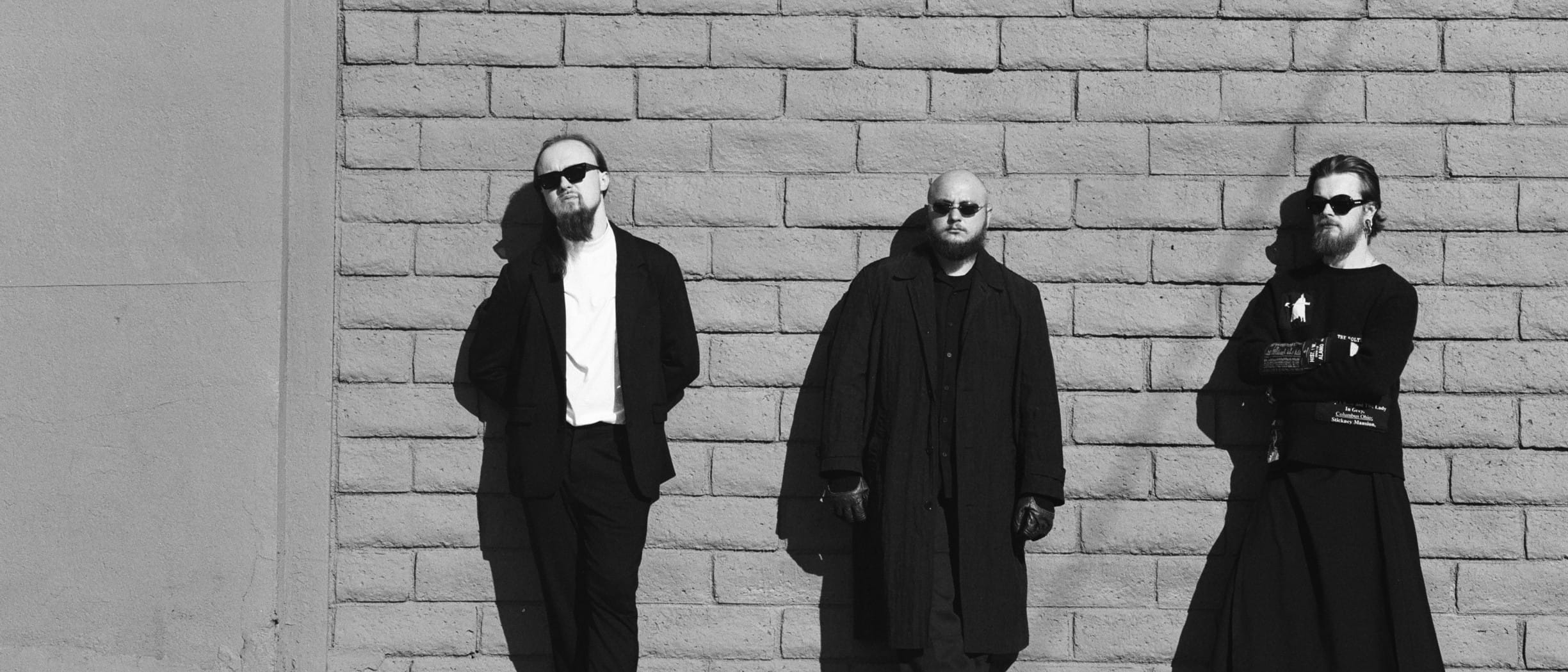
Molchat Doma are a post-punk band formed in Minsk, Belarus, in 2017, who rapidly became a surprising international touchstone for listeners drawn to austere synth textures and deadpan vocals. The core trio — Egor Shkutko (vocals), Roman Komogortsev (guitar, synth) and Pavel Kozlov (bass, synth) — make music that sounds like it was smuggled out of late‑Cold War Eastern Europe and played back in a present-day underground club. Their soundscape pairs chilly, propulsive basslines and brittle drum-machine patterns with analog synth washes; Shkutko’s baritone is delivered with a flat, reportorial cadence that intensifies the songs’ melancholic irony rather than softening it. Unlike many acts content to revive an aesthetic, Molchat Doma manage a taut synthesis of nostalgia and contemporaneity — their production is purposefully stripped yet meticulously arranged, which is why tracks like “Sudno (Boris Ryzhy)” and “Kommersanty” feel lived-in rather than pastiche.
They belong to a lineage of post‑punk and coldwave that includes Soviet-era synth pop, Western post‑punk acts like Joy Division and Bauhaus, and French coldwave bands such as Marquis de Sade; those comparisons surface frequently in reviews but don’t fully account for Molchat Doma’s Belarusian specificity. The band have cited assorted Eastern European influences and local music culture in interviews, and listeners can hear an affinity with melancholic Soviet bard songs in the way melody and minor-key sentiment carry emotional freight without grandiosity. On the production side, the way their records foreground reverb and analog warmth nods to 1980s production techniques while also speaking to contemporary DIY sensibilities — they build atmosphere with restraint rather than with maximalist ornamentation.
Their rise was unusually internet-driven: Molchat Doma’s profile exploded after bootlegged uploads and fan-made YouTube videos circulated widely, particularly in the early 2020s when algorithmic playlists and anonymous curators amplified them beyond Belarus. This digital diffusion—equal parts serendipity and subterranean fandom—turned songs recorded in modest studios into global anthems for listeners drawn to bleak, introspective music. A famous anecdote concerns their breakout on TikTok and YouTube compilations, where tracks like “Sudno” were used under footage and edits, generating millions of streams long before traditional labels fully recognised the band’s market. The scenario highlights both the power and the precariousness of platform-driven discovery: Molchat Doma benefited from enthusiastic grassroots sharing but remained cautious about commodification and how their image was repackaged.
While they’re sometimes framed in anglophone media as a retro novelty, several contemporary bands and producers have acknowledged Molchat Doma’s impact on reviving interest in coldwave aesthetics. Acts in the indie and alternative electronic scenes — especially those exploring sombre synth-driven textures — have cited them as part of a broader movement that made sparse, melancholic electronic arrangements feel urgent again. The band’s aesthetic also fed into a wave of DIY labels reissuing regional post‑punk and coldwave records, creating a cross-pollination between archival interest and new creative output. That influence is less about imitation than about validating a palette: Molchat Doma showed that minimal, bleak music could find large and diverse audiences in the streaming era.
Politically and culturally, Molchat Doma’s work resists simple readings: their lyrics tend toward oblique, image‑driven vignettes rather than overt manifestos, which has allowed listeners from different contexts to attach varied meanings. Coming from Belarus — a country with a fraught political climate, especially after 2020 — their music has been interpreted by some fans as reflective of the general malaise and surveillance-era anxiety of post‑Soviet spaces, though the band have not pivoted to explicit protest songs. Their reticence itself feels political in a small way: choosing artful ambiguity over direct sloganeering preserves space for private, interior experience. For left‑leaning listeners and critics, that bittersweet introspection can function as a quiet form of solidarity — a reminder that cultural expression persists even under constraining conditions, and that aesthetic resistance need not always be loud to be meaningful.