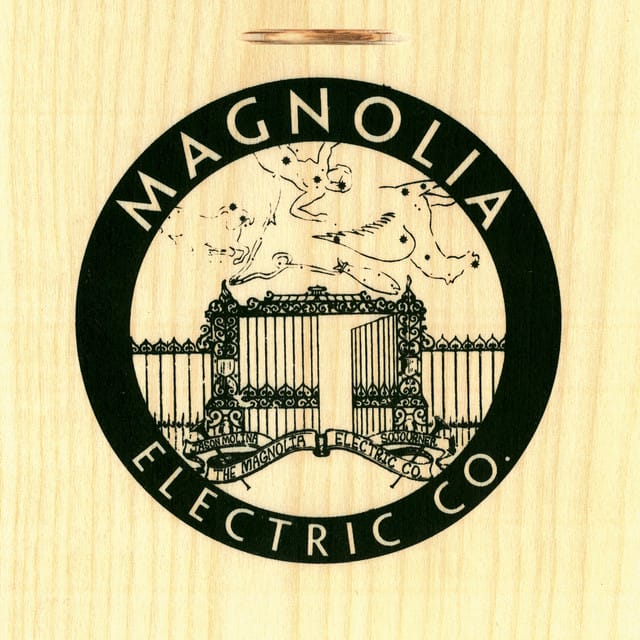

Magnolia Electric Co. is the moniker adopted by Jason Molina following the dissolution of his earlier project, Songs: Ohia. Hailing from Ohio, Molina’s work under this name marked a shift towards a fuller band sound, blending elements of indie rock and alt-country with a raw, emotive intensity that became his signature. The music carries a haunting, almost spiritual quality, often drawing comparisons to the likes of Neil Young and Townes Van Zandt, whose storytelling and melancholic tone clearly influenced Molina’s songwriting style.
The band’s sound is steeped in Americana but filtered through a distinctly modern lens, with Molina’s gravelly voice delivering lyrics that explore themes of despair, redemption, and existential searching. Magnolia Electric Co. was never a traditional band in the strictest sense; rather, it was a rotating collective of musicians centred around Molina’s vision. This fluidity allowed for a dynamic and evolving sound, which made each album feel like a new chapter in an ongoing narrative rather than a mere continuation of the last.
One of the more famous anecdotes surrounding Magnolia Electric Co. involves their 2003 album, “What Comes After the Blues,” which was recorded with a sense of urgency and vulnerability. It was said that Molina recorded many of the vocals in a single take, capturing a rawness that resonated deeply with fans and critics alike. This album, alongside “Fading Trails,” has been cited by many contemporary artists as a touchstone for blending indie rock with traditional American music forms, influencing bands like The National and Wilco in their approach to storytelling and atmosphere.
Despite Molina’s relatively low profile compared to mainstream rock acts, Magnolia Electric Co. has garnered a devoted following and critical respect for its uncompromising honesty and artistic integrity. The band’s legacy is amplified by Molina’s tragic death in 2013, which cast his body of work in a new light, prompting many to revisit his music with a deeper appreciation for its emotional weight and lyrical depth. His influence continues to ripple through the indie and alt-country scenes, inspiring a generation of musicians who seek to marry poetic lyricism with raw musical expression.
Magnolia Electric Co. remains a poignant example of how music can serve as a vessel for personal and collective catharsis. The band’s work is not just a collection of songs but a profound exploration of the human condition, marked by its stark honesty and a refusal to shy away from life’s darker corners. For those willing to engage with its complexities, Magnolia Electric Co. offers a rich, rewarding experience that stands apart from the more polished and commercial sounds dominating the music landscape.