
Hurray for the Riff Raff is the stage name of Alynda Segarra, a Bronx-born, New Orleans-based singer-songwriter whose music has always resisted tidy genre labels. Segarra grew up in the Bronx and left home as a teenager, traveling across the United States before settling in New Orleans, where the city’s musical history became central to their artistic identity. The project’s name sounds like a traditional folk ensemble, but its records draw just as readily on punk, country, blues, soul and protest music.
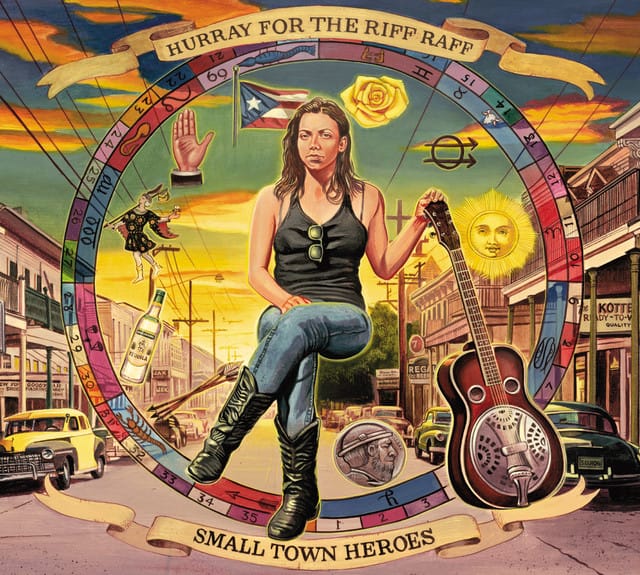
Segarra’s early years on the road shaped the project’s handmade, outsider quality. They traveled by freight train and bus, playing in punk and folk settings and absorbing the directness of performers who treated songs as testimony rather than decoration. That background can be heard in the rough-edged early albums, especially Look Out Mama and Small Town Heroes, where traditional American forms are used to tell stories about precarious lives, displacement and people who rarely appear at the center of popular music.
The strongest influences on Hurray for the Riff Raff are artists who combine social observation with musical clarity: Woody Guthrie, Lead Belly, Bob Dylan, Nina Simone and the folk singers of the American South. Segarra has also spoken about the importance of queer punk culture and the freedom they found outside conventional ideas of success. On later releases, particularly The Navigator (2017), those influences are filtered through a more personal lens: the album’s character, Navita, reflects Puerto Rican identity, migration and the experience of growing up between inherited culture and an often hostile city.
A notable turning point came with The Navigator, which marked a deliberate move away from the antiquarian image that had gathered around the group. Rather than presenting folk music as a museum piece, Segarra used salsa, rock, spoken-word passages and New York street sounds to make a record about self-recovery and cultural memory. The album’s title and narrative structure were part of that argument: the past was not a fixed map, but something that could be reclaimed and redrawn.
Hurray for the Riff Raff have not generally been cited as a direct influence by a large number of famous bands in the way that a major rock institution might be, and it would be misleading to invent a long list of such testimonials. Their influence is more visible in the example they set: a project that has made room for migration, queerness, class, Puerto Rican heritage and political anger within contemporary folk songwriting. Segarra’s career is compelling precisely because it treats American roots music not as a closed tradition, but as a living language that can still be challenged and changed.