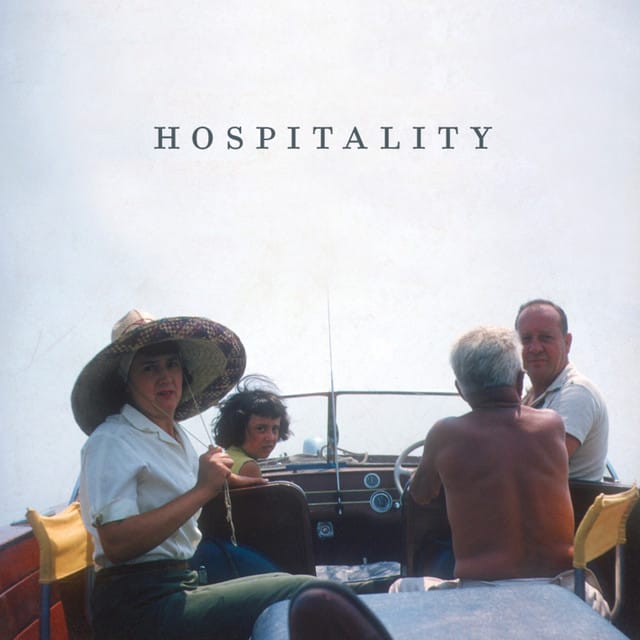

Hospitality are an indie-pop trio from Brooklyn, New York, formed in 2007 and led by singer-songwriter Amber Papini. Their sound — bright chiming guitars, tight rhythmic interplay and Papini’s conversational, literate vocal delivery — sits at the intersection of post-punk crispness and twee-ish melodic clarity, but it’s wrong to reduce them to any single subgenre. They write with a diaristic eye for small social moments: travel anxieties, awkward romance, the drain of creative compromise. Those subjects are delivered without melodrama, giving their songs the quiet weight of someone sketching out an honest scene rather than declaiming a manifesto.
Influences are audible without being slavish. Papini and company have acknowledged an affection for the melodic sensibilities of 1960s pop — think Burt Bacharach-style phrasing — and the angular rhythmic snap of post-punk bands like Wire and the Chameleons. You also hear traces of ‘90s college-rock clarity (Josh Kaufman’s tasteful guitar textures nod toward that lineage). Crucially, Hospitality’s arrangements favour restraint: rather than piling effects on top of each other, they leave space so lyrical detail can breathe, which is as much a production choice as an aesthetic one.
They first attracted wider notice with their self-titled debut LP, released in 2012 on Merge Records. The record’s combination of artful restraint and immediate hooks earned them critical plaudits and airplay on tastemaker stations and blogs, opening doors to larger festival bills and support slots. A common anecdote from that era: their early tours were famously DIY and modest — van stints, house shows, and tight budgets — and those conditions, band members have said in interviews, helped sharpen their focus on songcraft and stage chemistry rather than spectacle.
As for Hospitality’s influence on other acts, their impact is subtle and scene-specific rather than headline-grabbing. Within Brooklyn’s indie community and among younger bands admiring concise, literate pop, Hospitality is often pointed to as a model for blending articulate storytelling with clean, precise arrangements. You won’t find a long list of charting artists crediting them as a primary influence, but peers and newer acts in the indie-pop circuit have cited Hospitality’s example when discussing how to make songs that feel intimate without being lo-fi excuses for sloppy songwriting.
There are also human stories that stick with listeners. One oft-repeated moment is Papini’s frankness in interviews about balancing artistic ambition with ordinary life pressures — a tension audible in songs that negotiate compromise and desire. That honesty made them a relatable presence in a music scene that can sometimes prize irony over vulnerability. While Hospitality never became a blockbuster name, their records continue to be rediscovered by people who appreciate carefully written pop that refuses both grandiosity and easy sentimentality.