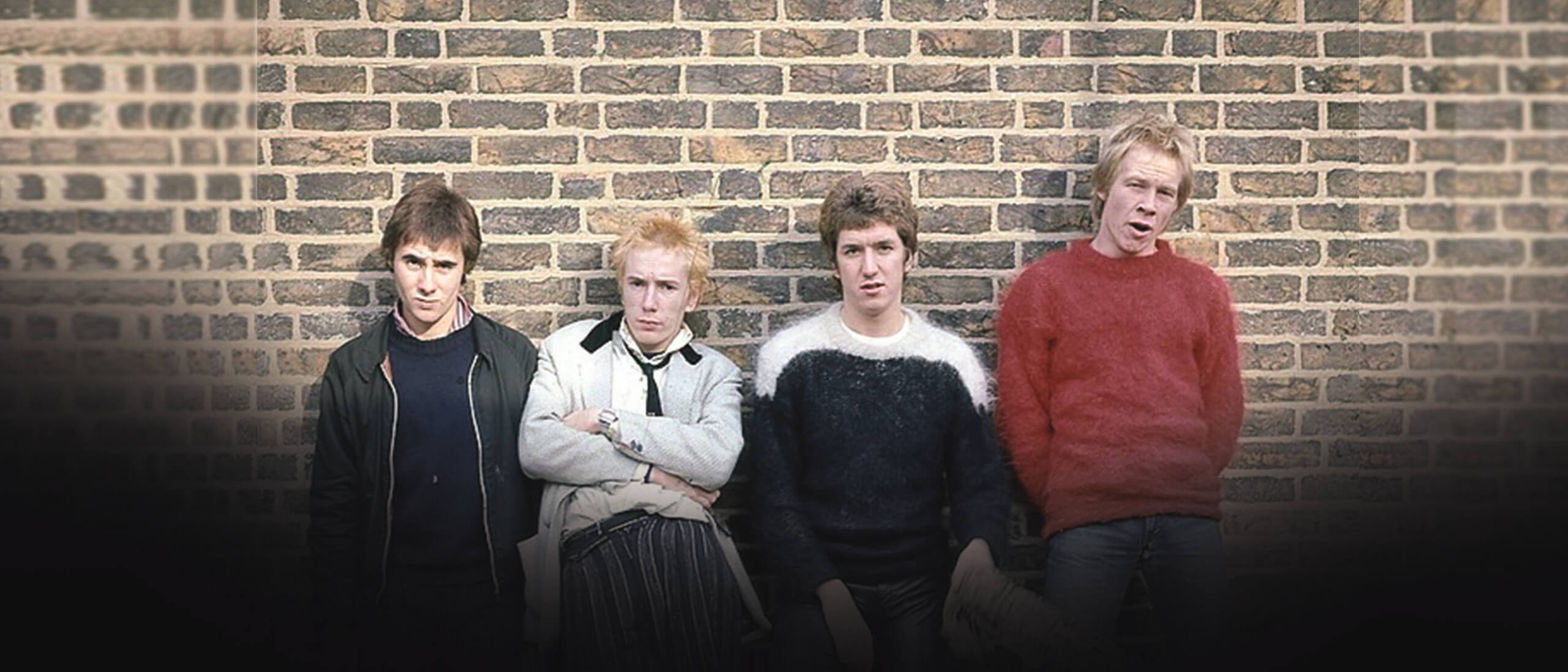
The Sex Pistols erupted from London in the mid-1970s with a venom that felt like a social fuse being lit; they were not merely a band but a cultural concussion. Rooted in the working-class streets of West London and Camden, their music and image were sharpened by the grime and malaise of the era—sneering vocals, three-chord assault, and a look patched together from safety pins, bondage trousers and Vivienne Westwood designs. That look and attitude made them immediate symbols of teenage fury and a rebuke to both the complacent rock establishment and the ostentatious excesses of prog and glam that dominated the airwaves.
Musically the Pistols drew on early rock’n’roll and rhythm-and-blues grit—Chuck Berry and Little Richard provided structural DNA—while borrowing the raw immediacy of proto-punk acts and garage bands. They were also influenced by the UK’s own pub-rock scene, particularly the stripped-back approach of groups like Dr. Feelgood. Yet the Sex Pistols’ sound was less about careful imitation and more about detonating those influences into something nastier and faster; Johnny Rotten’s caustic sneer, Steve Jones’s chunky power-chord attack, and Paul Cook’s relentless drumming turned simple riffs into a soundtrack for outrage.
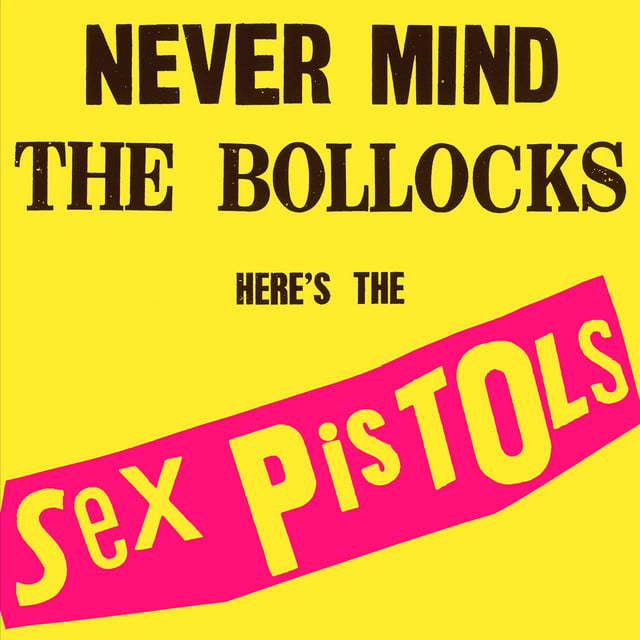
A string of famous anecdotes has followed them into legend: the profanity-laden TV interview with Bill Grundy in 1976 that sparked national scandal and suddenly made them household names; the notorious American tour where managers, legal tussles, and onstage mayhem coloured their short-lived stateside reputation; and the infamous 1978 swan song concert at San Francisco’s Winterland, with the band falling apart amid hostility and internal collapse. Their only studio album, Never Mind the Bollocks, Here’s the Sex Pistols, arrived like a manifesto—certified classic despite, or because of, the court cases and bans that swirled around it.
Their impact on subsequent music is unmistakable: punk bands from the Ramones in New York to the Buzzcocks in Manchester acknowledged a shared lineage of speed and attitude, while later generations—Nirvana, Green Day, and countless punk revival acts—cite the Pistols’ bluntness and anti-establishment posture as formative. Even bands that eventually moved toward more melodic or experimental directions have admitted that the Sex Pistols opened the possibility that you didn’t need virtuosity to make music that mattered; urgency and honesty could be a style in themselves. The band’s mythology—short, explosive, and chaotic—has proved as influential as the songs.
Despite their brief original lifespan, the Sex Pistols’ story keeps resurfacing because they compressed a social moment into a compact, combustible package. They demonstrated how a band could function as cultural shorthand—dangerous, dismissive, and impossible to ignore—while simultaneously leaving behind one tidy studio album and a trail of interviews, legal battles and myth-making. Whether loved, loathed, or merely studied, their presence recalibrated popular music’s boundaries and reminded successive generations that sometimes a furious, imperfect scream is more revolutionary than polished technique.