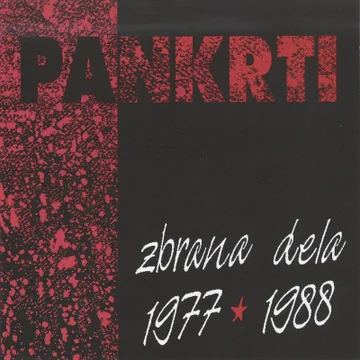
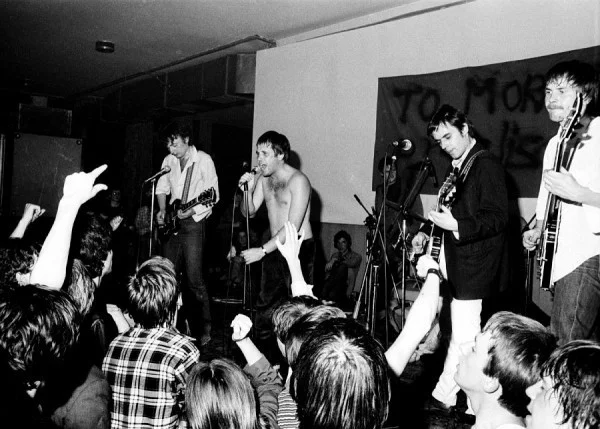
Pankrti, often hailed as the pioneers of punk rock in the former Yugoslavia, emerged from Ljubljana, Slovenia, in the late 1970s. At a time when the region was dominated by more traditional and state-approved music, Pankrti’s raw energy and rebellious spirit broke through, creating a seismic shift in the local music culture. Their name, meaning “The Bastards” in Slovenian, was a direct challenge to the establishment, perfectly encapsulating their confrontational ethos and the punk movement’s defiant attitude.
Musically, Pankrti drew heavily from the British punk scene, with bands like The Clash and Sex Pistols clearly influencing their sound and attitude. However, they managed to inject a distinct local flavour into their music, often singing in Slovenian and addressing socio-political themes relevant to their environment. Their lyrics were unapologetically critical of the communist regime and societal norms, which made them both controversial and beloved among the youth seeking an outlet for dissent.
One of the most famous anecdotes about Pankrti involves their early performances, which were often met with hostility from authorities. In one notable incident, their concert was interrupted by the police, leading to arrests and widespread media coverage. This only cemented their status as symbols of resistance and freedom of expression. Their fearless approach inspired a wave of punk and alternative bands across Eastern Europe, who saw Pankrti as trailblazers in a region where censorship was commonplace.
Their influence extends beyond their immediate geographic and temporal context. Bands from the Balkans and even Western Europe have cited Pankrti as a significant influence, recognising their role in shaping punk’s global narrative. Their legacy is evident in the way punk music in Eastern Europe developed, blending political critique with raw, unpolished sound — a formula that many bands have since adopted.
Despite their underground status for much of their career, Pankrti’s impact on the music scene is undeniable. They are often credited with opening the door for alternative and punk music in a tightly controlled society, proving that music could be a powerful tool for social commentary and change. Their story is not just about music but about courage, rebellion, and the enduring power of youth culture in challenging the status quo.