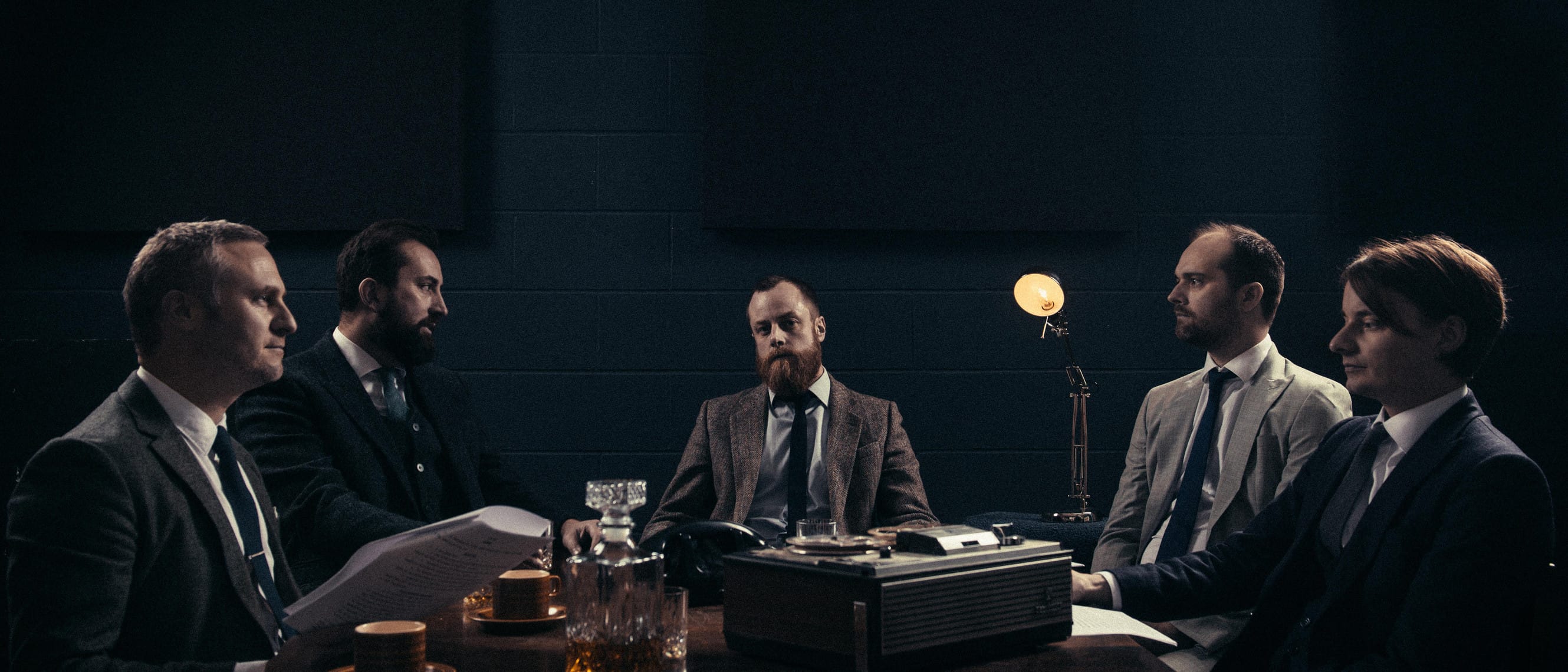
I Like Trains is a compelling band hailing from Leeds, England, known for their brooding, atmospheric soundscapes that blend post-rock and alternative influences. Their music often explores historical and socio-political themes, setting them apart from many contemporaries by combining rich storytelling with expansive sonic textures. The band’s name itself is a nod to the evocative power of trains as symbols of industrial progress and human movement, which aligns neatly with their lyrical content focused on history and change.
Influenced heavily by bands like Joy Division and Talk Talk, I Like Trains have crafted a sound that balances post-punk’s emotional intensity with the spaciousness of post-rock. Their music carries a weighty sense of melancholy and reflection, often underpinned by deep, resonant bass lines and measured drumming that build slowly into powerful climaxes. This approach places them alongside artists who prioritise mood and narrative over conventional pop structures.
An interesting anecdote about I Like Trains is their methodical approach to recording and touring. They have been known to meticulously plan their live shows to maximise atmosphere, sometimes even incorporating visual projections that enhance the storytelling element of their performances. This dedication has earned them a devoted following in the UK and beyond, despite not achieving mainstream chart success.
Other bands have recognised I Like Trains’ influence within the indie and post-rock scenes. While not always cited in mainstream discussions, their work has inspired emerging artists interested in combining historical narratives with expansive musical arrangements. Their impact is particularly noted among musicians who value depth and concept-driven albums over singles-focused careers.
Perhaps the most striking aspect of I Like Trains is their commitment to exploring difficult subjects through music — from industrial decline to war and personal loss — without resorting to clichés. This intellectual rigor, paired with their distinctive sound, ensures they remain a unique voice in contemporary British music. Their albums serve not only as collections of songs but as immersive experiences that challenge listeners to engage with history and emotion on a deeper level.