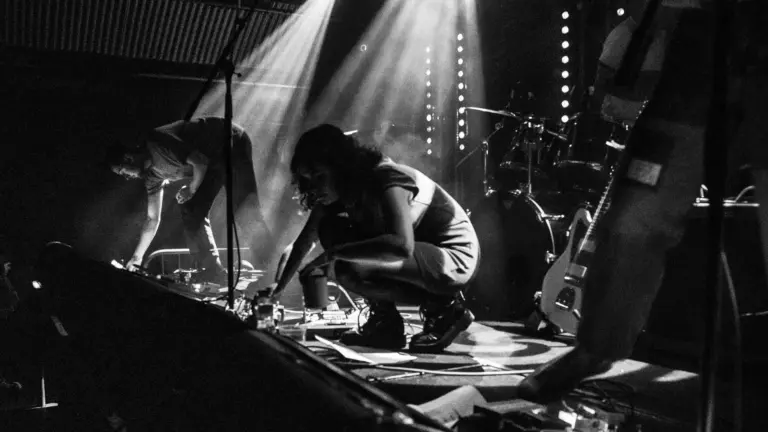

Caribou — the project led by Canadian musician Dan Snaith — has spent the past two decades quietly reshaping what electronic pop can be: music that marries the meticulousness of studio craft with a warmth that resists sterile club maximalism. Hailing from Toronto (Snaith was born in Dundas, Ontario, and later based in Toronto and London at different points), Caribou emerged from a background in mathematics and classical training — facts that help explain the compositional patience in tracks like “Odessa” and “Sun.” Those songs aren’t just built from beats and loops; they unfold like carefully plotted short stories, revealing subtleties only after repeated listens. Snaith’s work feels personal rather than performative: the voice in the mix is often treated as another instrument, fragile and human, threaded through layers of synth, field recordings and warm analog textures.
Snaith’s influences are unusually broad for an electronic artist: he’s openly appreciative of the classic songcraft of Motown and 1960s pop as much as the avant-electronic work of Brian Eno and the texturalism of krautrock. You can hear the lineage from psychedelic soul and pastoral psych to his use of looping and phased guitars; he’s also cited progressive rock and the meticulous production approaches of acts like Sly & the Family Stone for their blend of groove and studio experimentation. Jazz sensibilities inform his approach to rhythm and improvisation, while modern electronic producers — from Four Tet to Aphex Twin — share aesthetic concerns around timbre and repetition. This fusion yields tracks that sit comfortably between the intimate and the ecstatic, making Caribou records as suited to late-night headphones as to euphoric festival sets.
Caribou’s influence on peers and successors is significant and sometimes underplayed: artists across indie and electronic scenes often point to Snaith’s middle-ground approach — pop melodies married to textural depth — as a model for moving beyond strict genre boundaries. Acts such as Hot Chip and Four Tet have shared stages and mutual admiration, and you can trace a lineage through to newer producers who blend organic instrumentation with electronic processing in search of the same emotional immediacy. While not often name-checked in the same breath as massive pop producers, Snaith’s records have been quietly formative for producers who want songs that breathe and evolve, rather than simply spike and drop. His insistence on melodic movement within electronic frameworks opened a path for bedroom producers to think more compositionally.
Famous anecdotes about Caribou often highlight Snaith’s humility and his commitment to craft. One oft-repeated story: before finding wider acclaim as Caribou, Snaith released music under the name Manitoba but changed it after a threatened lawsuit from another artist — a reminder of how legal minutiae can shape artistic identities. Another telling moment came when Snaith turned down a DJ-centric career route in favour of playing live shows with a band configuration; that choice signalled a refusal to be confined to dancefloor service and emphasised the narrative arc of his records. Critics and fans also talk about his meticulous sample-chopping and use of found sounds — from creaking doors to garden noises — woven into tracks so they feel lived-in rather than assembled in a sterile lab.
Politically and culturally, Snaith’s work has often aligned with a left-leaning sensibility that prizes communal experience over spectacle. Caribou’s shows and festival appearances tend to foreground collective joy and inclusivity rather than rock-star posturing; his music encourages listening as a social act. While not overtly political in lyrics, the ethics of his practice — collaborative live setups, subtlety over sensationalism, and a focus on sonic ecology — reflect a broader progressive approach to art-making. Over the years, Caribou has remained a vital example of how electronic music can be personal, politically attentive in spirit, and deeply musical without sacrificing accessibility.