sept3

Christopher Nolan’s ‘The Odyssey’ has turned out to be a runaway success at the box office. Now it’s proved beyond my skill set to compile an episode entirely out of Odysseus-themed tracks, although the first track is ‘Ulysses’ and that’s the Romanised version of his name, so good start. Anyway, let’s help out by giving a thumbnail sketch of the heroes and heroines, gods and goddesses, massive snakes and bloodsucking ghouls not just in Roman and Greek mythologies, but from around the world, which appear in this episode.
Odysseus/Ulysses. Legendary king of Ithaca and the hero of Homer’s ‘Odyssey’. Also in Homer’s other blockbuster, the ‘Iliad’. Renowned for his intellectual brilliance, guile and versatility. Took him ten years to get home from the Trojan War, so not that brilliant at map reading, arguably.
Aphrodite/Venus. Ancient Greek/Roman goddess associated with love, lust, beauty, pleasure, passion, procreation, desire, sex, fertility, prosperity, and victory. Perhaps most famous in the arts for the painting by Botticelli, ‘The Birth of Venus’, the one where she emerges fully formed from a seashell, hanging in the Uffizi in Florence (and actually well worth seeing; not small and dark like the ‘Mona Lisa’).
Theseus. Divine Greek hero, famous for slaying the Minotaur, a mythical creature half man, half bull. If you had slain such a character, you definitely would merit a degree of fame, rather more so than some of our so-called ‘heroes’ of today, am I right?
Orpheus. Mythological Greek bard, legendary musician, poet and prophet. Famous for his ability to charm any animal simply by strumming his lyre. Equally noteworthy for descending to the underworld to rescue Eurydice. In a sad twist, death came at the hands of the maenads of Dionysus, who got tired of him mourning his late wife. Harsh.
Sisyphus. In Greek mythology, upsets Zeus for exposing his philandering. In a rare example of collective cabinet responsibility, the gods condemned him to push an immense boulder up a hill only for it to roll back down every time it neared the top, repeating this action for eternity. (Why do it every day then is surely the question that needs asking.)
Mercury. Roman god of boundaries, commerce, communication, divination, eloquence, money, languages, luck, thieves, travellers and trickery. The original multi-tasker. And, as if that were not enough, also the guide of souls to the underworld. And does have an actual planet named after him, fully justifiably.
Vampires. For proof that mythologies are endlessly malleable to reflect contemporary culture, look no further than the modern reinvention of the vampire. First came the Seductive Archetype, thanks to Anne Rice’s 1980s novels and 1990s films like ‘Interview with the Vampire’. Shows like ‘Buffy the Vampire Slayer’ and ‘The Vampire Diaries’ then introduced the soulful vampire struggling with a conscience, making ancient monsters emotionally vulnerable and relatable. Then the Twilight franchise turned vampires into misunderstood, moral figures. Mythologies never stand still.
Leviathan. In Gnosticism, the Leviathan, basically a massive snake, encompasses the world and incorporates the souls of those who are too attached to material things, so they cannot reach the realm of God. The political theorist Hobbes used Leviathan as a metaphor for the omnipotence of the state, which maintains itself by educating children in its favour, generation after generation. All a bit gloomy.
The Crane Wife. In Japanese mythology, the Crane Wife story relates the tale of a man who marries a woman, actually a crane disguised as a human. To make money, the crane wife plucks her own feathers to weave silk brocade, which the man sells, but she becomes increasingly ill as she does so. When the man discovers his wife’s true identity and the nature of her illness, devastated by the truth, he demands her to stop. She responds that she has been doing it for love, for them. The man says that love exists without sacrifice, but he is wrong. He who lives without sacrifice for someone else does not deserve to be with a crane. OK then.
Xenomorph. The name given to the mythological creature for the film ‘Alien’ in 1979. The concept is credited to the Swiss surrealist H.R. Giger. Not all mythologies are ancient. Fittingly, the name is Greek, meaning ‘foreign shape’ and is therefore a link to the concept of ‘xenia’, or Zeus’s law, which continually crops up in ‘The Odyssey’.
Oshun. Featuring in the track ‘River’ by the Franco-Cuban sisters Naomi and Lisa-Kainde Díaz, Oshun is the Yoruba river orisha spirit and the patron deity of Cuba in the Afro-Caribbean Yoruba tradition.
And, the icing on the cake, all the tracks alluding to these myths are top drawer as well.
Tracklisting (13 songs)
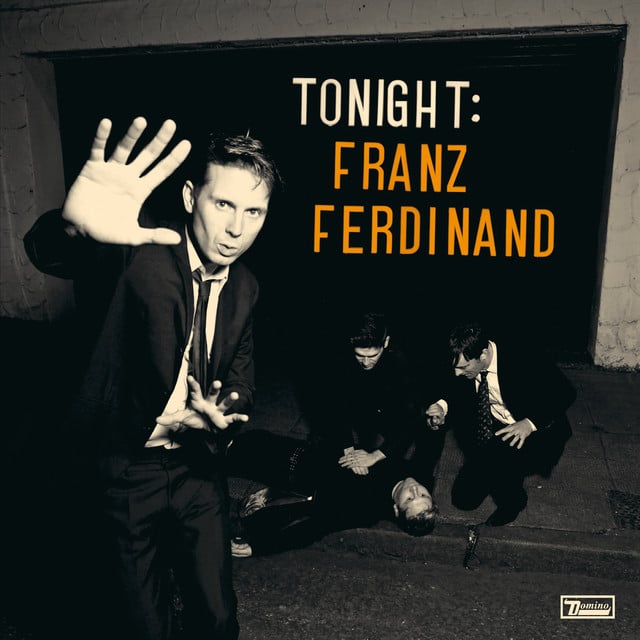
Ulysses
- Band/Artist:
- Franz Ferdinand
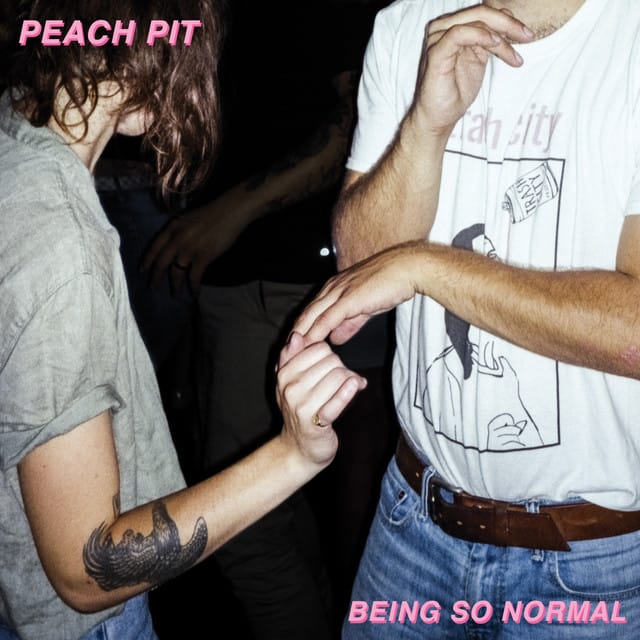
Alrighty Aphrodite
- Band/Artist:
- Peach Pit
Mythological Beauty
- Band/Artist:
- Big Thief
Venus As A Boy
- Band/Artist:
- Bjork
Orpheus Under the Influence
- Band/Artist:
- The Buttertones
xenomorph queen
- Band/Artist:
- Deep tan
Mercury
- Band/Artist:
- Automatic
Sisyphus
- Band/Artist:
- Andrew Bird
River
- Band/Artist:
- Ibeyi
VAMPIROS
- Band/Artist:
- ROSALÍA
The Crane Wife 3
- Band/Artist:
- The Decemberists
Hydrogen Helium Lithium Leviathan
- Band/Artist:
- Boards of Canada
Theseus
- Band/Artist:
- The Oh Hellos