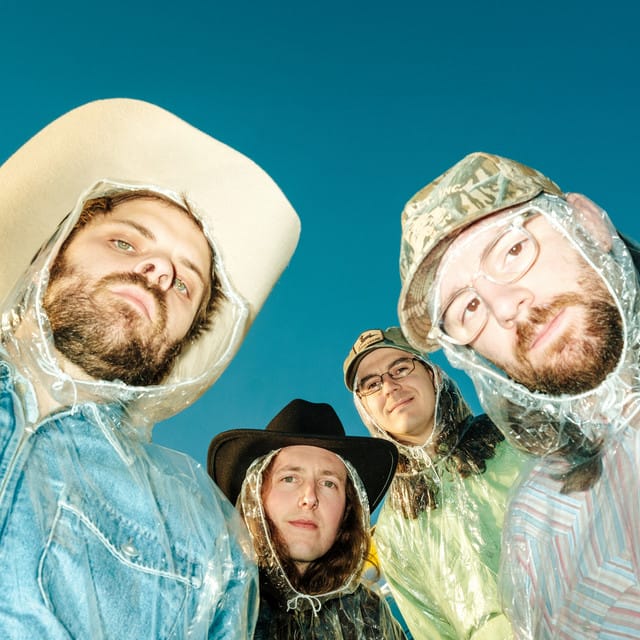
Peach Pit are an indie-pop band from Vancouver, British Columbia, formed around the songwriting of vocalist and guitarist Neil Smith, guitarist Christopher Vanderhoof, bassist Peter Wilton and drummer Mikey Pascuzzi. Their music is recognisable for its loose, elastic guitar work and a curious contrast between breezy arrangements and emotionally bruised lyrics. Rather than presenting heartbreak as grand melodrama, Smith often writes from the perspective of people making poor decisions, misreading affection or trying to keep their dignity after a relationship has already begun to collapse.
The band’s early identity was shaped by Vancouver’s local music community and by a fondness for the rhythmic subtlety of funk, soul and classic pop. Their influences are best heard as a blend rather than a simple list: nimble, clean-toned guitar lines recall the conversational playing of 1970s soft rock and jazz-pop, while the group’s understated grooves point towards funk and R&B. The band have also been associated with artists such as the Strokes, Mac DeMarco and Mild High Club in discussions of their sound, though Peach Pit’s particular combination of melancholy storytelling and bright, tightly interlocking guitar parts is distinctly their own.
Their name carries an anecdotal link to the television series The Simpsons: Neil Smith has explained that “Peach Pit” was taken from the fictional restaurant featured in Beverly Hills, 90210, a reference that suited the group’s taste for slightly kitsch, knowingly nostalgic imagery. That choice is revealing without being overly portentous. Peach Pit have often made music that feels culturally familiar at first glance, then more idiosyncratic once the details emerge—sunny surfaces, awkward characters and a persistent sense that something has gone wrong just outside the frame.
The song that first brought them substantial attention, “Alrighty Aphrodite”, established many of their defining traits. Its title sounds playful, but the song is driven by jealousy, romantic uncertainty and the uncomfortable knowledge that charm cannot repair a damaged relationship. The guitar seems to smile while the narrator spirals, and that tension became central to the band’s appeal. Tracks such as “Technochic” and “Up Granville” similarly turn specific social settings and personal embarrassments into sharply observed scenes, giving their catalogue a lived-in quality that generic indie-pop rarely achieves.
Peach Pit have attracted a loyal international audience, particularly among listeners drawn to technically polished playing that never feels showy for its own sake. There is no well-documented, widely accepted list of major bands that have publicly cited Peach Pit as a direct influence, so claims of a clear lineage should be treated cautiously. Their influence is more visible in the number of newer indie acts who have adopted similarly clean guitar tones, relaxed funk-derived rhythms and conversational vocal phrasing; still, Peach Pit remain better described as an important contemporary reference point than as a band with a firmly documented school of imitators.