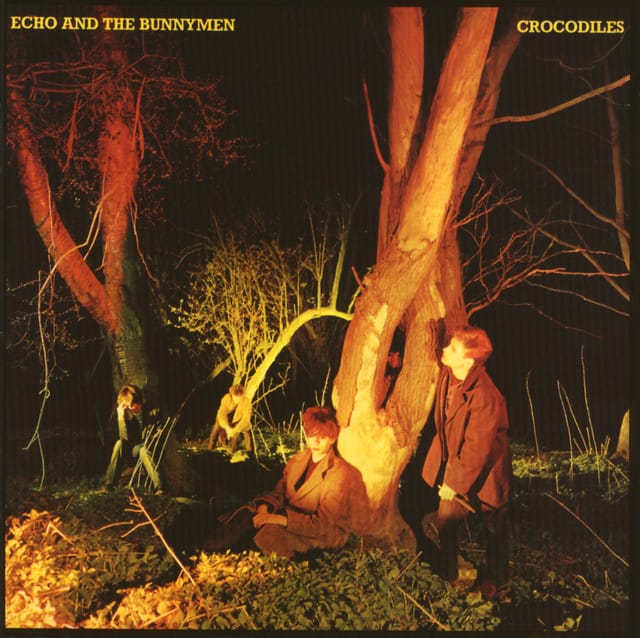
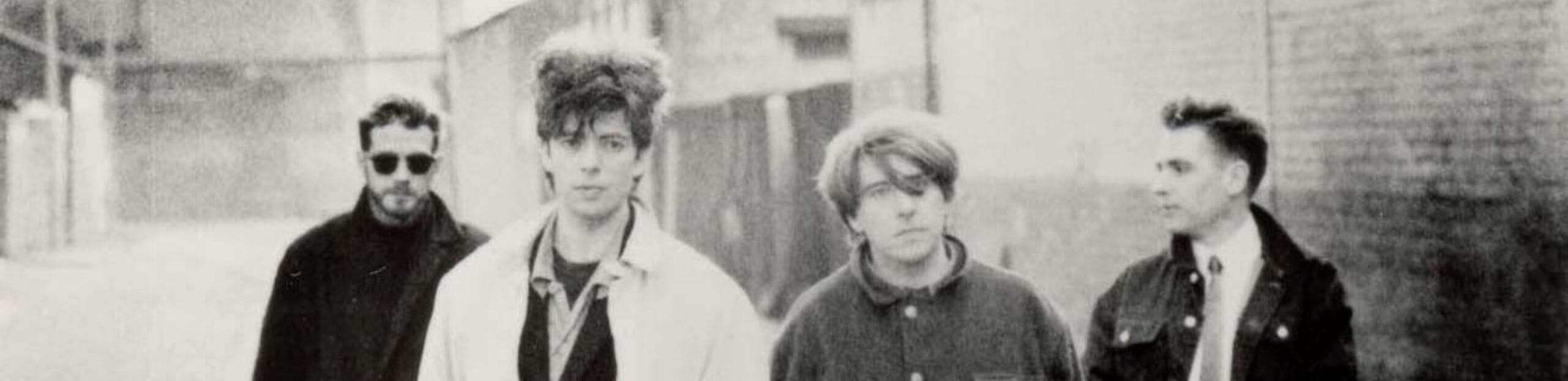
Echo & the Bunnymen, hailing from Liverpool, England, emerged in the late 1970s as a defining force in the post-punk scene. Their sound is marked by a blend of dark, atmospheric guitar work and Ian McCulloch’s distinctive baritone voice, creating a moody and introspective tone that set them apart from their contemporaries. The band’s early work, including their debut album Crocodiles (1980), captured a raw energy that combined punk’s urgency with a more melodic, almost psychedelic sensibility, drawing on influences like The Doors, The Velvet Underground, and David Bowie.
Lyrically and sonically, Echo & the Bunnymen were deeply influenced by the mysterious and cinematic qualities of 1960s psychedelia, as well as the emerging post-punk ethos that emphasised mood and texture over straightforward rock riffs. Their guitarist, Will Sergeant, developed a signature style that layered shimmering, reverb-heavy riffs, which contributed to the band’s haunting soundscapes. This approach influenced many bands in the 1980s and beyond, including The Killers and Interpol, who have cited Echo & the Bunnymen as a major inspiration for their own atmospheric rock styles.
One of the band’s most famous anecdotes involves their 1984 hit “The Killing Moon”, a track that has since become iconic for its enigmatic lyrics and sweeping arrangement. The song’s production was reportedly influenced by the band’s fascination with film scores, particularly those by Ennio Morricone, which helped create its dramatic and cinematic feel. The track’s enduring appeal was further cemented when it featured prominently in the cult film Donnie Darko, introducing Echo & the Bunnymen to a new generation of listeners decades after its release.
Despite periods of internal tension and lineup changes—including the departure of bassist Les Pattinson and the temporary exit of McCulloch—the band has maintained a loyal following and critical respect. Their resilience is notable, as they have continued to release music and tour well into the 21st century, adapting their sound while retaining the core elements that made them influential. Echo & the Bunnymen’s ability to blend melancholic lyricism with lush, textured instrumentation remains a blueprint for many alternative and indie rock bands.
Echo & the Bunnymen’s legacy is also reflected in their impact on the Liverpool music scene, bridging the gap between the city’s punk roots and the more expansive sounds that followed. Their influence extends beyond music; their aesthetic and lyrical themes have inspired filmmakers, writers, and artists who appreciate their blend of mystery, romance, and existential reflection. In all, Echo & the Bunnymen stand as a band that not only shaped a genre but also created a lasting atmosphere that continues to resonate across multiple creative fields.