
Beach House are an American dream-pop duo from Baltimore, Maryland, formed in 2004 by vocalist and keyboard player Victoria Legrand and guitarist, keyboard player and producer Alex Scally. Their music is recognisable for its deliberate pacing, blurred edges and unusual balance between warmth and distance: Legrand’s deep, commanding voice sits inside Scally’s organ-like keyboards, chiming guitar and carefully shaped production. Although they emerged from Baltimore’s independent music scene, their songs often feel detached from a specific place, built from recurring images of night, memory, weather and emotional disorientation.
Their influences include the Velvet Underground, Neil Young, the Cocteau Twins, Mazzy Star and French composer François de Roubaix, as well as the grand, melodramatic language of classic pop. The Cocteau Twins’ influence is especially apparent in Beach House’s preference for texture over literal explanation, while the Velvet Underground connection can be heard in their taste for repetition and understated menace. Legrand’s aunt, the celebrated French singer Mianne, also forms part of the family’s musical background. Beach House have never sounded like a simple revival act, however: they use familiar ingredients to create songs that seem suspended between a pop single and a half-remembered film score.
A notable part of the band’s history is how firmly they resisted the usual pressure to become more immediately accessible. Their early records, including Beach House and Devotion, developed through small shifts rather than obvious reinvention. The breakthrough came with Teen Dream in 2010, an album whose songs were paired with individual videos and whose expanded scale made their music more widely known without stripping away its mystery. “Zebra”, “Norway” and “Silver Soul” showed that Beach House could write memorable melodies while maintaining a sound that remained hazy, spacious and faintly elusive.
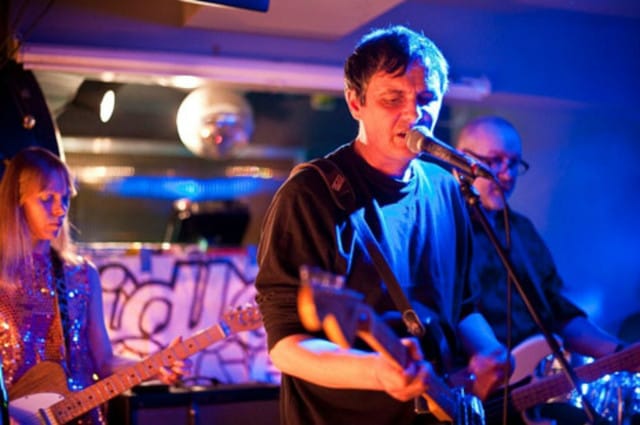
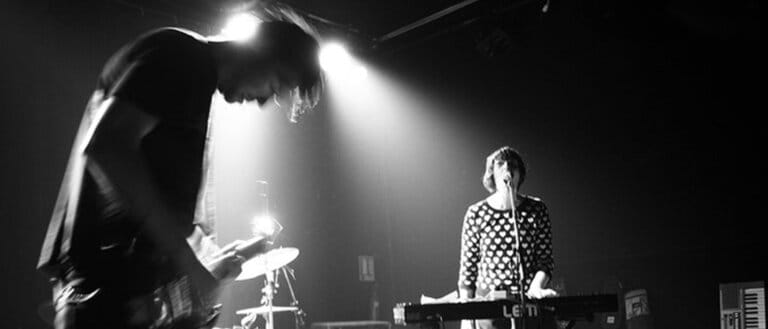
The duo’s working relationship has also shaped their reputation. Legrand and Scally have often described Beach House as a partnership based on instinct rather than a rigid division of labour, with arrangements refined until they feel emotionally inevitable. Their concerts extend that approach: projected imagery, saturated lighting and long instrumental passages make the performances feel less like a sequence of songs than a continuous atmosphere. An often-repeated anecdote from their rise is that, after years of gradual recognition, they found themselves playing increasingly large rooms while still relying on the same basic two-person creative core—an outcome that suited a band whose music had always suggested scale beyond its personnel.
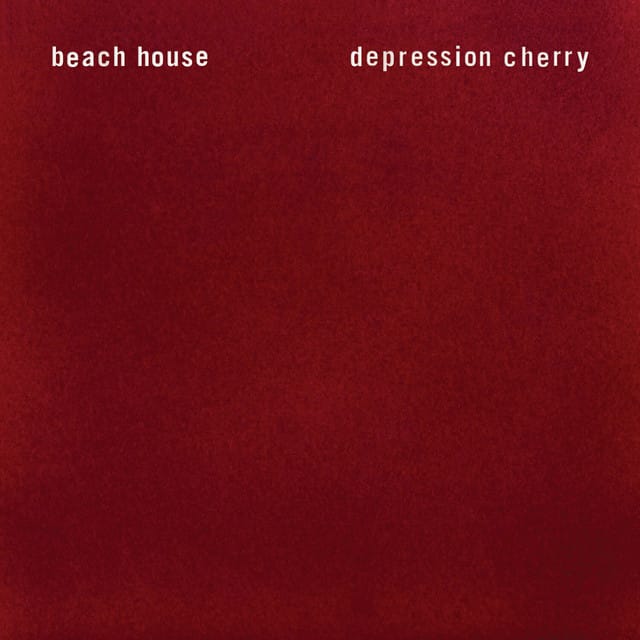
Beach House have been cited as an influence by artists working across indie rock, electronic music and contemporary pop, including Mitski, Japanese Breakfast and the xx, while later acts such as Cigarettes After Sex are frequently discussed alongside them as part of the same wider taste for slow, nocturnal romanticism. Their influence is less about copying a particular guitar tone than about proving that restraint can be powerful: a song can move forward at a near-glacial pace, avoid obvious lyrical explanations and still become deeply memorable. Across albums such as Bloom, Depression Cherry, 7 and Once Twice Melody, Beach House have made that controlled ambiguity feel not like a limitation, but like the central point of their art.