Pulp, hailing from Sheffield, England, emerged from the post-punk shadows of the late 1970s to become one of the defining voices of Britpop in the 1990s. Fronted by the charismatic and sharp-witted Jarvis Cocker, their sound is a unique blend of glam rock, disco, and indie pop, layered with lyrics that dissect the mundanity and eccentricities of British working-class life. Unlike many of their contemporaries, Pulp’s music often carries a theatrical and narrative quality, making their albums feel like vivid snapshots of social observation rather than just collections of songs.
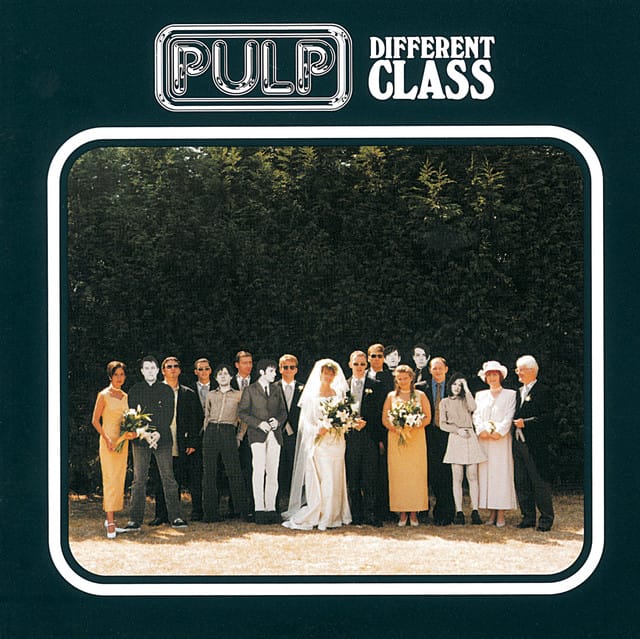
The band’s influences are eclectic, ranging from the glam rock of David Bowie and Roxy Music to the post-punk edge of Joy Division and The Fall. Jarvis Cocker’s lyrical style owes much to the biting social commentary of Morrissey and the storytelling prowess of Ray Davies from The Kinks. This mix of influences helped Pulp craft a sound that was both accessible and intellectually engaging, setting them apart in the crowded Britpop scene dominated by Oasis and Blur. Their 1995 album Different Class is often cited as a masterstroke of British pop music, combining catchy melodies with sharp, often darkly humorous lyrics about class, love, and social ambition.
Pulp’s influence extends beyond their immediate era; bands like Arctic Monkeys and Franz Ferdinand have acknowledged the impact of Pulp’s storytelling and Jarvis Cocker‘s stage presence on their own work. The band’s ability to blend sharp social commentary with danceable beats has inspired a generation of musicians looking to merge intellect with indie rock. Their impact is not just musical but cultural, as their songs often capture the zeitgeist of 1990s Britain with a rare authenticity and wit.
One of the most famous anecdotes about Pulp involves their 1996 Brit Awards performance, where Jarvis Cocker famously stormed the stage during Michael Jackson’s performance of “Earth Song,” lifting his shirt and mooning Jackson to protest what he saw as Jackson’s messianic posturing. This moment became emblematic of Cocker’s rebellious and anti-establishment persona, adding to the band’s lore and cementing their place as one of the most outspoken acts of their time.
Despite their commercial peak in the mid-90s, Pulp’s story is not just one of chart success but of perseverance and reinvention. They initially struggled for over a decade before breaking through, with early albums largely overlooked. Their journey from Sheffield’s indie scene to international fame is a testament to their distinctive voice and refusal to conform to industry expectations. Even after long hiatuses, their music continues to resonate, proving that Pulp’s blend of sharp storytelling and catchy tunes remains timeless.